The rapid development of technology and innovation is having a profound impact on citizens’ daily lives and on all sectors of society and the economy, while also playing an important role in improving the accessibility and quality of public services. However, due to differences in digital skills, access to digital devices, and environmental and physical conditions, there remains a real risk of a digital divide and unequal digital accessibility. This has become an important policy issue in ensuring equal participation in society and protecting human rights.
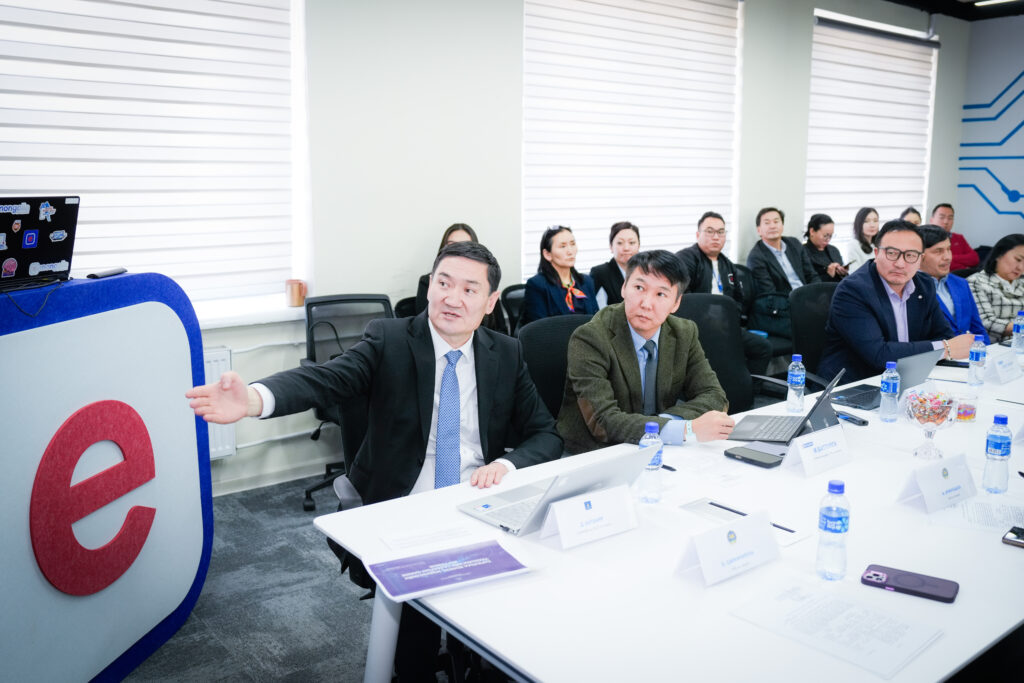
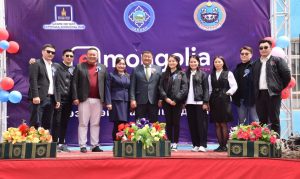
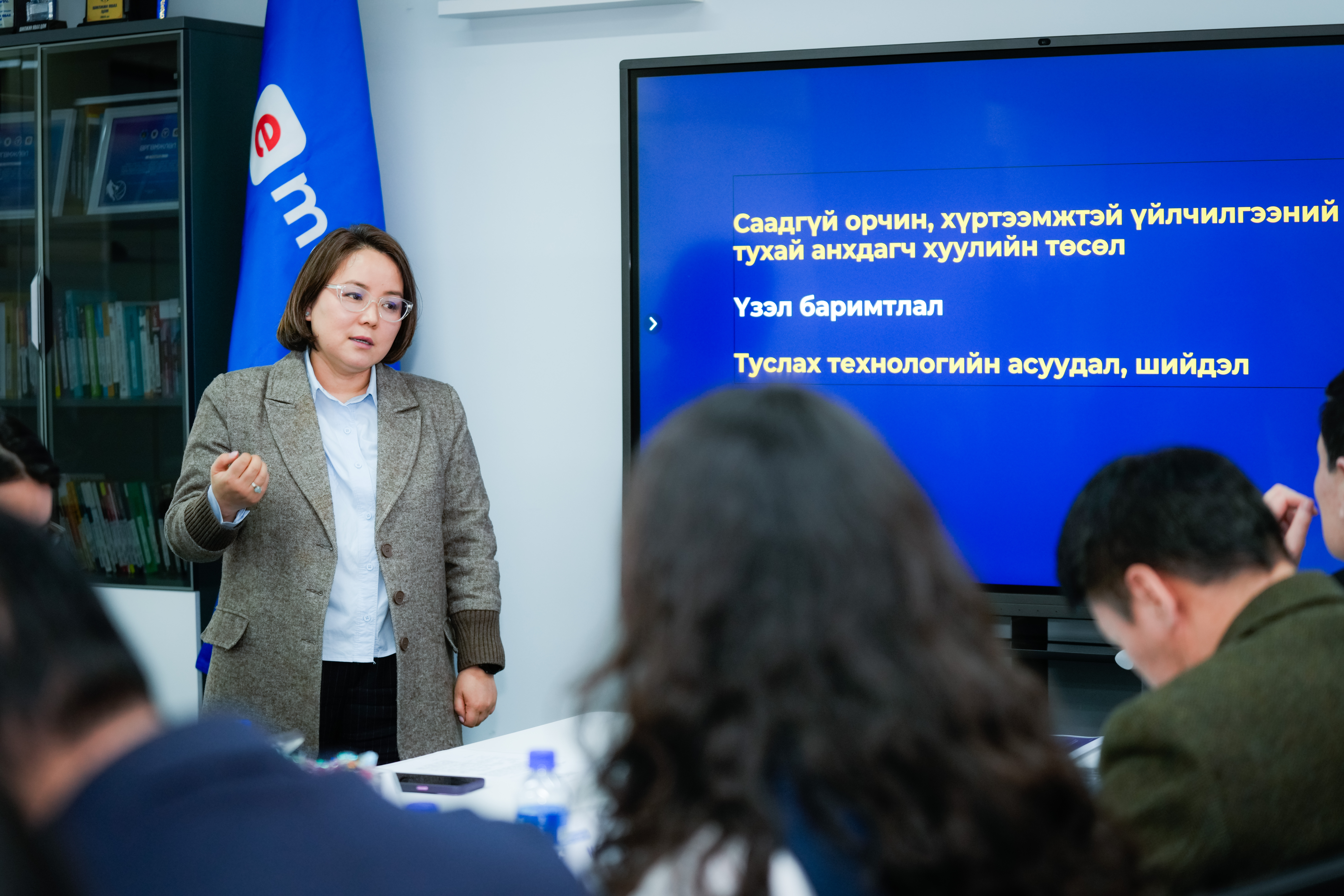
Within the framework of addressing this issue, members of the State Great Hural (Parliament) and affiliated organizations under the Ministry of Digital Development, Innovation and Communications jointly organized a meeting on “Digital Accessibility in the Communications and Information Technology Sector” on January 21, 2026.
Participants included Members of Parliament O. Saranchuluun and A. Ariunzaya, Deputy Minister of Digital Development, Innovation and Communications G. Bayarkhuu, Director of the Strategy, Policy and Planning Department of the Ministry D. Batbayar, Director of the “E-Mongolia Academy” M. Battulga, Head of the Digital Skills Division of the Digital Skills and Public Relations Department under the Public Digital Services Regulatory Agency N. Altansuvd, Head of the Administration Division of the Communications Regulatory Commission A. Erdenebulag, and other relevant officials. The participants exchanged views on the current state of the sector, policy implementation, and future trends.
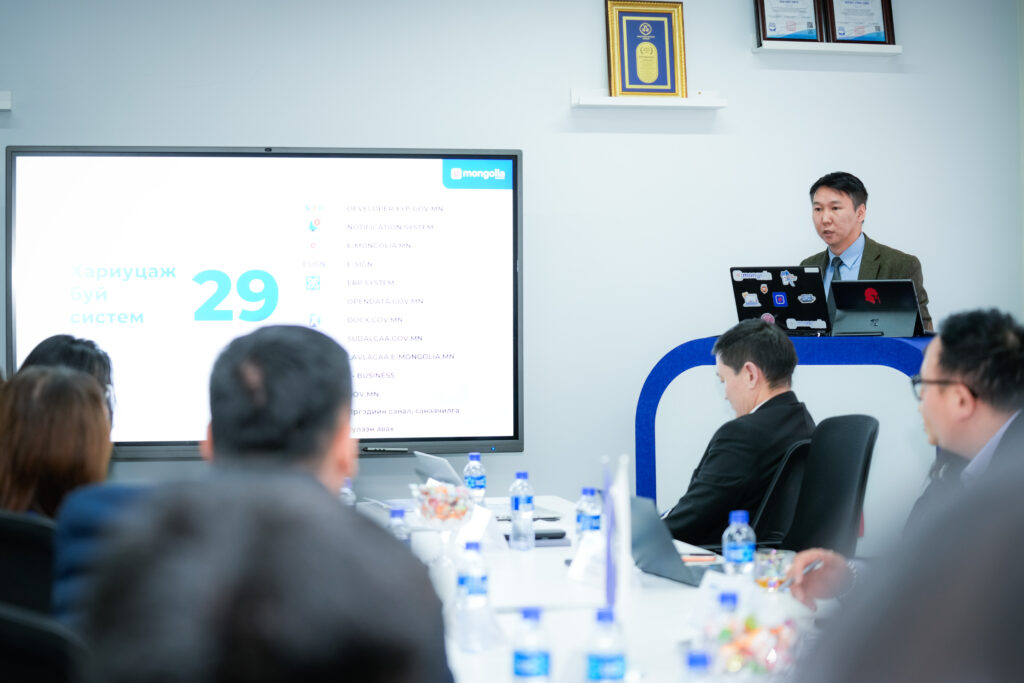
During the meeting, participants comprehensively reviewed the objectives and implementation progress of Mongolia’s digital transformation policy. Key areas discussed included transforming public services into simpler, more accessible, and citizen-centered services; improving public information infrastructure; increasing nationwide digital literacy; developing and strengthening human resources; ensuring cybersecurity; improving data exchange; increasing transparency of information; and advancing space research and space technology. The participants emphasized that Mongolia aims to intensify digital transformation across all sectors of society and significantly improve accessibility and quality as part of its strategic goal of becoming a “digital nation.”
To improve the accessibility of digital services, the “E-Mongolia Academy” has been gradually implementing the requirements of the international WCAG accessibility standards within the E-Mongolia system. Since 2025, the introduction of sign language interpreter operator services has enabled citizens with hearing impairments to directly and seamlessly access government digital services and information. In addition, special accessibility features for citizens with visual and hearing impairments such as screen magnification, color contrast adjustment, and screen reader solutions have been introduced. Citizens with speech impairments can also receive consultations through video calls, significantly improving digital accessibility.
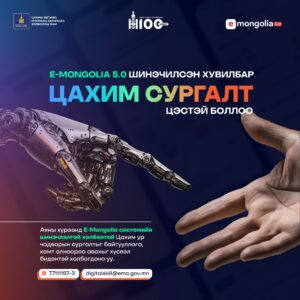
Furthermore, the organization’s Training Department has been conducting phased digital literacy training programs for citizens with special needs. To date, 687 citizens have participated in these trainings. Participants at the meeting highlighted that these efforts are making an important contribution to ensuring equal participation in digital transformation and implementing citizen-centered service policies.
Going forward, sector organizations agreed to establish a joint working group dedicated to systematically improving digital accessibility. The group will focus on strengthening policy coordination, studying the best international practices, and improving the legal and regulatory environment.
This initiative is particularly significant because it aligns with the activities of the working group established under Resolution No. 523 of the Speaker of the State Great Khural dated December 26, 2025, which is tasked with developing recommendations and drafting relevant legislation concerning a human-friendly, accessible environment and equal participation.